The HCWF team is collaborating with international partners, brought together by the Gates Foundation, to develop a tropics-first, Africa-first weather forecasting toolkit that will be customized for farmers in Africa. The goal is to develop a set of protocols for building AI models tailored to stakeholder needs, and work to ensure that ultimately African farmers will benefit. This toolkit can then inform the development of the next generation of weather and subseasonal-to-seasonal forecast models—bridging the gap between AI’s potential and its practical applications for meteorologists in low- and middle-income countries.

Advances in AI make it possible to tailor forecasting models to the factors stakeholders on the ground need to know to make decisions. Drawing lessons from its successful India monsoon modeling effort, the HCWF team and its international partners are working to compare and assess various forecasting models to identify the best models for the specific needs of African farmers. They are then combining and adjusting the models to meet those needs—a process known as “decision-relevant benchmarking.”

Working alongside Rhiza Digital and other partners such as Cambridge University, Leeds University, and the Climate Hazards Center at the University of Santa Barbara, the forecasts will be disseminated and used to inform the decisions of farmers in Africa. Using the forecast models developed by major research centers and tech firms the HCWF team will assess the potential economic gains and losses for key crops, factoring in different decisions farmers might make in response to the forecasts, as well as different measures of forecast accuracy. The analysis will focus on five countries: Senegal, Kenya, Ghana, Nigeria, and Ethiopia.

In addition to producing a tropics-first, Africa-first framework tuned to the needs of African farmers, the team will develop a toolkit that can be used by the African National Meteorological and Hydrological Services—as well as meteorologists in other low- and middle-income countries—to tailor their forecast models to other sectors or weather needs in the future.

Leadership

Scholar

Pedram Hassanzadeh

Associate Professor, Geophysical Sciences and Computational and Applied Math; Director, AI for Climate Initiative
Scholar

Amir Jina

Assistant Professor, Harris School of Public Policy

Katie Kowal

Director, AI for Weather, AI For Climate Research Initiative, University of Chicago
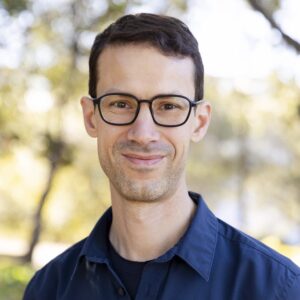
William Boos

Professor, UC Berkeley

News and Insights

News·Mar 30, 2026

University of Chicago and Ethiopia Collaborate to Scale AI-based Weather Forecasts for Farmers

The Human-Centered Weather Forecasts Initiative’s collaboration with the Ethiopian Meteorological Institute will establish an Africa-focused framework for AI-powered weather forecasting and build the local capacity needed to provide farmers with timely and actionable information.